Introduction
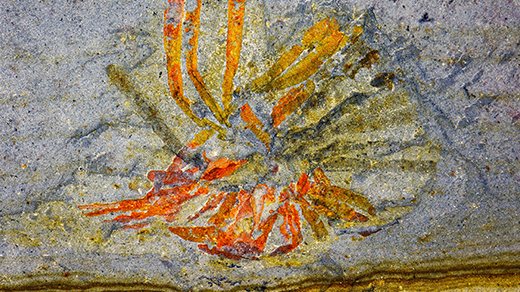
Roughly 540 million years ago, toward the start of the Cambrian Period, the planet was mostly ocean, and life was both alien and vaguely familiar. Small, phallic-looking worms rummaged through ocean-floor sediments while blind swimming beasts flung out whiplike tentacles to ensnare prey. Meanwhile,
First Domain
Many animals live in groups. Among seabirds in particular, most species form colonies during the breeding season. Although coloniality entails costs, such as increased competition for food and disease transmission, its repeated evolution across animal lineages suggests that group living provides imp
Second Domain
Scientists have discovered that switching off a protein called Mitch makes human cells burn more fat and prevents new fat cells from developing. The breakthrough builds on experiments in mice that showed remarkable resistance to obesity and improved muscular endurance, raising hopes for a new approa
The Connection
Roughly 540 million years ago, toward the start of the Cambrian Period, the planet was mostly ocean, and life was both alien and vaguely familiar. Small, phallic-looking worms rummaged through ocean-floor sediments while blind swimming beasts flung out whiplike tentacles to ensnare prey. Meanwhile,
Conclusion
Many animals live in groups. Among seabirds in particular, most species form colonies during the breeding season. Although coloniality entails costs, such as increased competition for food and disease transmission, its repeated evolution across animal lineages suggests that group living provides imp