In the annals of maritime disasters, the capsizing of a ferry off the coast of northern Cyprus stands as a stark reminder of the fragility of human endeavors. The vessel, carrying nearly 270 souls, turned over shortly after leaving port, leaving eight dead and many others missing. This tragic event, however, serves as a metaphor for the broader challenges faced by modern society, particularly in the realm of technology.
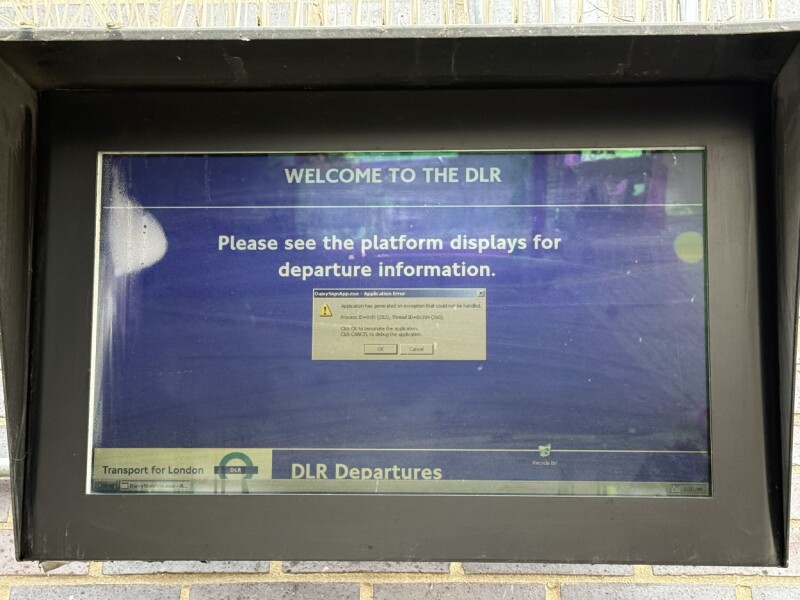
Consider, for a moment, the Docklands Light Railway in London, where the ghost of XP-era Windows continues to haunt the system. The wonderfully named DaisySignApp.exe, a relic from a bygone era, persists in its digital duties, defying the march of progress. This anachronism is not merely a quirk of the railway's infrastructure; it is a testament to the resilience of outdated technology in the face of modernity.
The ferry's capsizing and the railway's reliance on XP-era Windows may seem unrelated, but they share a common theme: the struggle to adapt to changing circumstances. Just as the ferry was ill-prepared for the challenges of the open sea, so too is the Docklands Light Railway ill-equipped to handle the demands of contemporary computing. Yet, in both cases, there is a glimmer of hope.
Enter the concept of shared fandom, a social phenomenon that has been gaining traction as a potential remedy for division and isolation. At the Harvard Kennedy School, social scientists are advancing the proposition that sports fandom, in particular, can serve as a powerful social medicine. The idea is that by uniting people around a common passion, fandom can bridge the gaps that divide us.
This notion of shared enthusiasm as a unifying force is not limited to sports. It extends to all manner of collective interests, from music and movies to technology and beyond. In the context of the Docklands Light Railway, for example, one might imagine a community of retro computing enthusiasts rallying around the preservation of XP-era Windows, finding solace and camaraderie in their shared appreciation for outdated technology.
The ferry's journey, then, can be seen as a tale of survival and connection. The passengers, though faced with adversity, were united by their shared experience. Similarly, the users of the Docklands Light Railway, though confronted with the challenges of an outdated system, are bound together by their collective reliance on XP-era Windows.
In the aftermath of the ferry's capsizing, a new era of tech and community may emerge. The survivors, having endured the ordeal, may find strength in their shared experience. The users of the Docklands Light Railway, having navigated the complexities of an outdated system, may discover a sense of purpose in their collective endeavor.
The conclusion, then, is both thought-provoking and absurd: perhaps the key to navigating the challenges of the modern world lies not in the relentless pursuit of progress, but in the embrace of the past. By uniting around outdated technology and shared fandom, we may find the resilience and connection needed to weather the storms of the future.